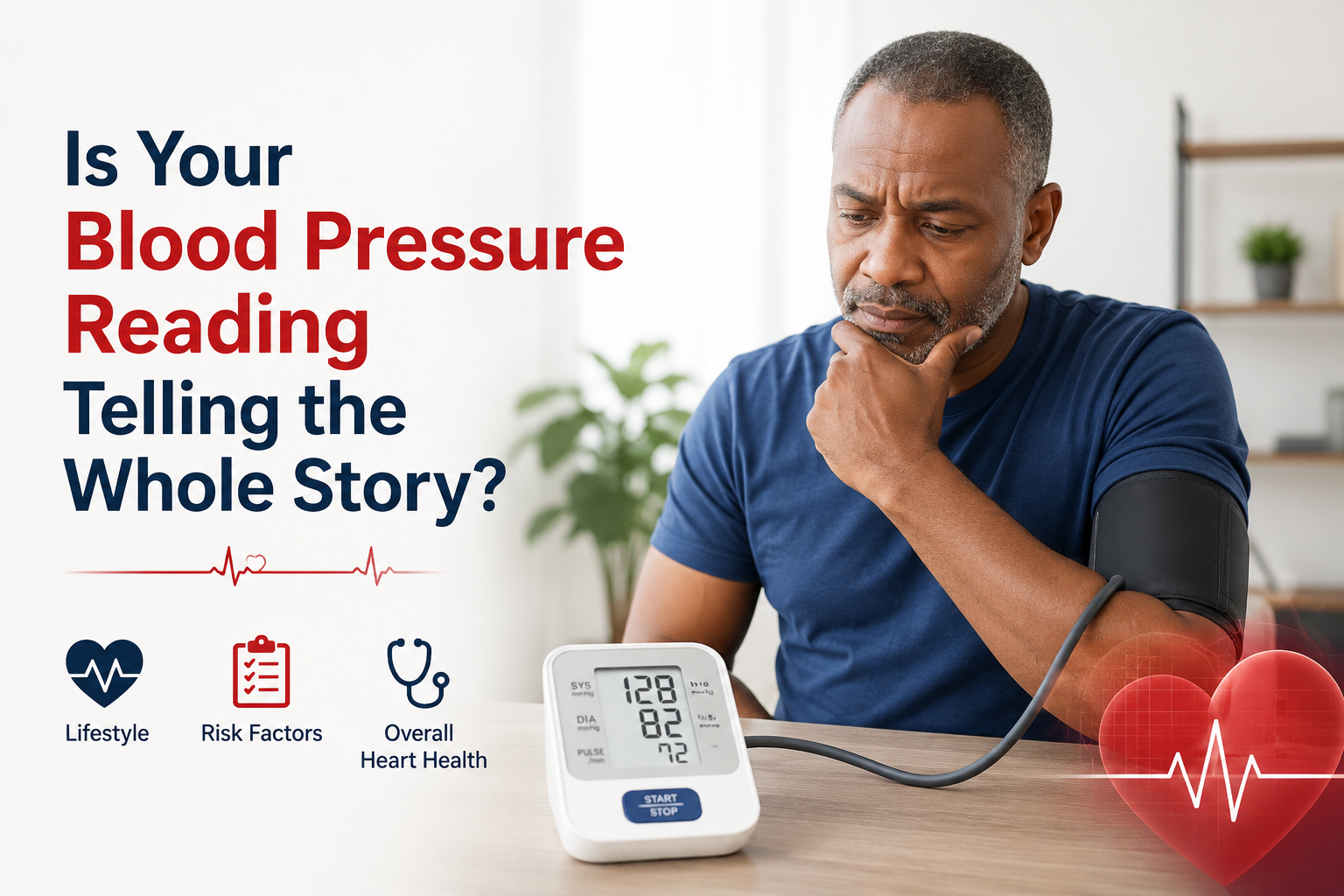
Is Your Blood Pressure Reading Telling the Whole Story?
By Dr. Oladapo Adewuya, Cardiologist
You sit in the clinic chair. The blood pressure cuff tightens around your arm. A few seconds later, a number appears on the screen:
“120 over 80 — you’re fine.”
You feel relieved.
But what if that single reading does not tell the complete story?
As a cardiologist, I see patients every week whose blood pressure readings reveal a more complex picture than one clinic visit can show. Understanding how blood pressure changes — and knowing how to monitor it properly — can help prevent false reassurance and support early detection of potential heart risks.
?
The Problem With a Single Blood Pressure Reading
Blood pressure is not a fixed number. It naturally changes throughout the day depending on different factors such as stress, physical activity, caffeine intake, emotions, sleep, and even the environment where it is measured.
For example, some people experience the “white coat effect” — a temporary rise in blood pressure caused by anxiety during a medical visit.
A single high reading does not always mean you have hypertension. On the other hand, a single normal reading does not always mean your blood pressure is consistently healthy.
This is why home blood pressure monitoring is often recommended, especially for people with borderline readings or risk factors such as family history, diabetes, obesity, or increasing age.
?
What Your Blood Pressure Numbers Actually Mean
Blood pressure is recorded using two numbers:
* Systolic pressure (the top number): The pressure in your arteries when your heart beats.
* Diastolic pressure (the bottom number): The pressure in your arteries when your heart rests between beats.
Category Systolic (Top Number) Diastolic (Bottom Number)
Normal Less than 120 Less than 80
Elevated 120–129 Less than 80
Stage 1 Hypertension 130–139 80–89
Stage 2 Hypertension 140 or higher 90 or higher
Source: American College of Cardiology/American Heart Association Guidelines
?
How to Measure Your Blood Pressure Correctly at Home
If you are monitoring your blood pressure at home, proper technique is important. Small mistakes can affect your results.
Follow these steps:
1. Rest Before Measuring
Sit quietly for at least 5 minutes before taking your reading.
2. Maintain Proper Position
* Keep your feet flat on the floor.
* Support your back.
* Place your arm at heart level.
3. Avoid Things That Can Raise Blood Pressure Temporarily
Avoid caffeine, exercise, and smoking for at least 30 minutes before measuring.
4. Take Multiple Readings
Take two readings, about one minute apart, in the morning and evening for several days to get a more accurate picture.
5. Use a Reliable Monitor
Not all blood pressure monitors provide accurate results. Choose a validated device recommended by trusted medical organizations.
?
When One Blood Pressure Reading Is Not Enough
Some people experience masked hypertension, where their blood pressure appears normal during a clinic visit but is actually high at home.
Others experience white coat hypertension, where their blood pressure is elevated in the clinic but normal outside the hospital.
Both situations are important because they can increase cardiovascular risk and require proper evaluation.
In some cases, a cardiologist may recommend ambulatory blood pressure monitoring — a small wearable device that records blood pressure continuously over 24 hours — to provide a clearer understanding of your blood pressure pattern.
?
The Bottom Line
Your blood pressure is more than just one number.
A single reading is a starting point, not a final diagnosis.
Tracking your blood pressure over time gives doctors better information to make accurate decisions about your heart health. If you have risk factors such as a family history of heart disease, obesity, diabetes, or you are above 40 years old, regular monitoring can be an important step toward prevention.
Early detection, accurate information, and timely medical guidance can lead to better heart health outcomes.
?
Need Advice About Your Blood Pressure or Heart Health?
[schedule a consultation](../index.html#bookingForm) with Dr. Oladapo Adewuya, Consultant Cardiologist, for professional evaluation and personalized heart care guidance.
← Back to All Articles